
Challenge

Solution
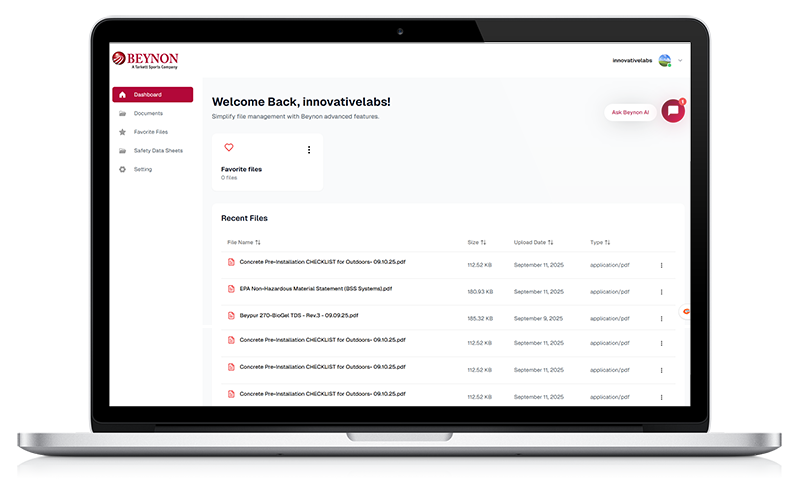
We built a secure, AI-enabled web application designed to make product data easy to search, access, and manage. At its core, a vector database organizes large volumes of technical documents, while an LLM-powered search engine allows users to ask questions in plain language and instantly find accurate results. A clean, web-based interface with visual navigation makes browsing simple and intuitive, and a robust role-based access control (RBAC) system ensures sensitive information is only accessible to the right people. To keep the platform running seamlessly, our team provides continuous support, regular updates, and performance monitoring.
Impact
The deployment of the AI-backed application delivered measurable improvements across the organization. Natural language queries enabled instant, accurate results, drastically reducing search times and allowing employees to access spec sheets, test results, and other documents with ease. This quick access accelerated workflows, boosted productivity, and improved decision-making. Robust role-based access control strengthened compliance and safeguarded sensitive product information, while the intuitive interface and visual catalog enhanced user experience and encouraged adoption. Most importantly, the vector database and modular architecture positioned the platform for future scalability, ensuring it could adapt to growing data volumes and evolving use cases.
Tech Stack