
Enterprise Digital Transformation Roadmap: 2026 Guide
An enterprise digital transformation roadmap is a structured guide that translates digital strategy into measurable business outcomes by aligning people, processes, and technology across the organization. Most large-scale transformation programs fail not because of bad technology choices, but because of weak discovery, scattered priorities, and poor adoption. The visible signs, including platform underuse and delayed timelines, are symptoms of organizational problems that start long before a single line of code is written. Building a disciplined roadmap for digital innovation is the difference between a transformation that delivers results and one that drains budget for years.

What are the core components of an enterprise digital transformation roadmap?
A successful enterprise digital transformation roadmap starts with organizational discovery, not technology selection. Before any platform is purchased or any process is automated, leaders must collect operational, customer, financial, and employee data to understand where the real breakdowns are. Skipping this step is the single most common reason transformation programs stall.
Discovery is not a one-time workshop. Transformation programs that rely on continuous discovery establish repeatable methods to identify work breakdowns, prioritize fixes, and measure learning before scaling. This means building a rhythm of structured interviews, process observation, and data analysis that runs throughout the program, not just at the start.
Data quality is a prerequisite, not an afterthought. Leaders frequently buy platforms before cleaning their data, which leads to automating broken processes and compounding existing inefficiencies at scale. Budget 15–20% of your program timeline for data preparation, including audits, deduplication, and verification. Addressing legacy software integration challenges early prevents costly rework later in the program.
The foundational prerequisites for a sound digital transformation strategy include:
Executive sponsorship: A named C-suite owner with authority to resolve cross-functional conflicts and kill underperforming initiatives.
Cross-functional governance: A standing committee that includes business, IT, finance, and HR representatives meeting on a fixed cadence.
Capability assessment: A clear map of current technical and organizational skills versus what the target state requires.
Data readiness: Verified, deduplicated data in core systems before any new platform goes live.
Pro Tip: Run a two-week discovery sprint before finalizing your roadmap. Interview frontline workers, not just managers. The gap between what leadership believes is happening and what workers actually experience is almost always where the transformation will break down.
How to develop and prioritize initiatives within the roadmap?
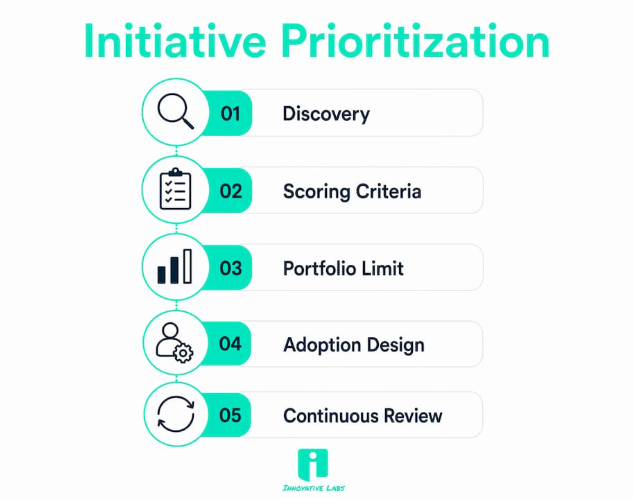
Converting discovery insights into a focused portfolio is where most enterprises lose discipline. Without a clear scoring method, initiative selection becomes political. The loudest voice in the room, or the team with the biggest budget, ends up driving the agenda rather than evidence.
Objective prioritization frameworks based on business impact, feasibility, employee and customer impact, and adoption readiness prevent this drift. Scoring each initiative against these criteria forces honest conversations about resource constraints and realistic timelines. The Scaled Agile Framework, known as SAFe, advocates phased delivery focused on highest-impact initiatives first, allowing the roadmap to adapt as priorities evolve and new evidence emerges.
The table below shows how to evaluate initiatives across four key criteria categories:
Criteria category
What to measure
Why it matters
Business impact
Revenue, cost reduction, or risk mitigation potential
Keeps the portfolio tied to financial outcomes
Feasibility
Technical complexity, integration risk, and data readiness
Prevents overcommitting to initiatives that will stall
Adoption readiness
User willingness, training requirements, and process fit
Predicts whether the change will actually stick
Learning value
New capabilities or data generated for future decisions
Builds organizational intelligence over time
Prioritization also requires a portfolio size limit. Enterprises that load their roadmap with 30 or 40 initiatives simultaneously dilute focus and exhaust change capacity. A focused portfolio of 8–12 active initiatives at any given time produces better outcomes than a sprawling list that nobody can track.
Pro Tip: Score every proposed initiative before it enters the roadmap. Assign numerical weights to each criteria category and require a minimum threshold score for inclusion. This single practice removes more political bias from transformation planning than any governance structure alone.
How to design adoption strategies and embed change management in digital transformation?
Technology deployment without adoption design is just expensive shelf ware. Enterprise change management is the discipline that determines whether new tools and processes actually change how people work. Most transformation programs underinvest here and then wonder why adoption metrics are flat six months after go-live.
Resistance from middle managers is the most underestimated adoption barrier in large organizations. This resistance is usually rational, not emotional. When a manager's performance metrics, bonus structure, or team headcount are tied to legacy workflows, adopting a new system threatens their standing. Addressing incentive misalignment before rollout is not a soft skill exercise. It is a prerequisite for adoption.
Effective adoption strategies for a digital transformation program include:
Involve frontline employees in design. Workers who help shape a new process are far more likely to use it. Avoid the "solution-first trap" where technology is selected and then handed to users with a training manual.
Build internal champion networks. Identify respected individuals in each business unit who receive early access, deeper training, and a formal role in supporting their peers during rollout.
Align managerial incentives. Revise performance reviews and team goals to reward adoption behaviors, not just project completion milestones.
Run phased training programs. Deliver training close to the moment of use, not weeks before go-live. Role-specific modules outperform generic sessions.
Create structured feedback loops. Set up weekly or biweekly channels where users report friction points. Act on that feedback visibly so employees trust the process is responsive.
Understanding how workflow automation fits into daily work routines helps teams see the practical benefit of new tools rather than viewing them as additional burden. The goal is to make the new way of working easier than the old way, not just technically superior.
What metrics and feedback mechanisms ensure measurement of transformation success?
Measuring activity instead of outcomes is one of the most common and costly mistakes in digital transformation programs. Counting the number of training sessions delivered or the percentage of users who logged into a new platform tells you almost nothing about whether the transformation is working.
Measuring adoption metrics alongside execution and outcome metrics is the only way to detect adoption issues before they become program failures. Adoption metrics track behavioral change: are people actually working differently? Execution metrics track delivery: are projects on time and on budget? Outcome metrics track results: are costs down, revenue up, or customer satisfaction improved?
The three metric types work together:
Leading indicators (adoption metrics): daily active usage rates, task completion rates in new systems, and reduction in workarounds or shadow processes.
Lagging indicators (outcome metrics): cycle time reduction, error rate decline, customer satisfaction scores, and cost per transaction.
Execution indicators: milestone completion, budget variance, and risk log status.
Transformation roadmaps should evolve with continuous feedback, embedding an operating rhythm that reviews evidence weekly or biweekly rather than quarterly. Quarterly reviews are too slow to catch adoption problems before they compound. A weekly adoption dashboard reviewed by program leadership creates the accountability needed to act fast when metrics signal trouble.
Pro Tip: Set a "minimum viable adoption" threshold for each initiative before declaring it complete. If fewer than 70% of target users are working in the new process consistently after 60 days, the initiative is not done. It needs intervention.
What common pitfalls should enterprises avoid when implementing a digital transformation roadmap?
The most damaging mistakes in enterprise transformation programs are predictable and preventable. Recognizing them before they occur is far cheaper than recovering from them mid-program.
Falling into the solution-first trap. Selecting a technology platform before completing discovery locks the organization into a solution that may not fit the actual problem. Discovery must precede vendor selection, not follow it.
Skipping data cleansing. Buying platforms before cleaning data automates and scales existing inefficiencies. Invest in data quality as a foundational step, not a parallel workstream.
Governance drift. Mega transformation programs fail when accountability for scope, risk, and value realization becomes fragmented. Assign clear ownership and enforce it through standing governance structures.
Capability gaps between business and IT. Programs that lack hybrid roles, sometimes called Business Technologists, who understand both operational priorities and technical design, suffer from constant rework and miscommunication. Embedding hybrid business-technical roles reduces this friction significantly.
Treating transformation as a project. Successful transformations embed continuous improvement into operating models permanently. Programs that close down after go-live lose the governance needed to kill underperforming initiatives and redirect resources to higher-value opportunities.
Key Takeaways
A successful enterprise digital transformation roadmap requires continuous discovery, objective prioritization, adoption-centered change management, and outcome-based measurement to deliver lasting business results.
Point
Details
Discovery before technology
Complete organizational discovery and data cleansing before selecting or deploying any platform.
Objective prioritization
Score initiatives on business impact, feasibility, adoption readiness, and learning value to remove political bias.
Incentive alignment
Revise managerial incentives to reward adoption behaviors, not just project delivery milestones.
Three-tier measurement
Track leading adoption indicators, lagging outcome metrics, and execution indicators simultaneously.
Continuous governance
Maintain standing governance that reviews evidence weekly and kills underperforming initiatives without delay.
What I've learned from watching enterprise transformations succeed and fail
The pattern I see most often is this: organizations spend 80% of their planning time on technology selection and 20% on everything else. Then they spend the next two years wondering why nobody is using the platform they bought.
The roadmaps that actually work treat discovery as a permanent operating function, not a phase that ends. They review adoption data every week, not every quarter. They treat resistance from middle managers as a signal that incentives need to change, not a communication problem that another all-hands meeting will fix.
The most underrated element in any digital transformation strategy is the internal Business Technologist: someone who speaks both operational and technical language fluently. Every program I have seen struggle has had a hard wall between the business side and the IT side. Every program I have seen succeed has had people who could stand on both sides of that wall and translate.
How Innovative Labs helps enterprises build transformation roadmaps that deliver
Large enterprises need more than a technology vendor. They need a partner who understands that transformation success depends on aligning engineering, process design, and organizational change from day one.
Innovative Labs brings a decade of experience building custom software solutions for enterprises that need platforms built around their actual workflows, not generic templates. From HIPAA-compliant systems to cloud-native architectures, Innovative Labs designs and maintains technology that fits the organization rather than forcing the organization to fit the technology. If your enterprise is ready to build a transformation roadmap grounded in discovery and built for adoption, contact Innovative Labs to start the conversation.
FAQ
What is an enterprise digital transformation roadmap?
An enterprise digital transformation roadmap is a structured plan that aligns technology, people, and processes to deliver measurable business outcomes across a large organization. It defines phased initiatives, governance structures, and success metrics for the full transformation program.
Why do most digital transformation programs fail?
Most digital transformations fail due to weak organizational discovery, poor adoption design, and governance drift rather than bad technology choices. Visible symptoms like platform underuse and delayed timelines trace back to these root causes.
How long should data preparation take before platform deployment?
Budget 15–20% of your total program timeline for data preparation, including audits, deduplication, and verification. Deploying platforms on unclean data automates existing inefficiencies and compounds them at scale.
What is the most important adoption metric to track?
Daily active usage rates and task completion rates in new systems are the most reliable leading indicators of adoption. If these metrics are low 30 days after go-live, the program needs immediate intervention before the problem compounds.
How often should a transformation roadmap be reviewed and updated?
Transformation roadmaps should be reviewed on a weekly or biweekly cadence, not quarterly. Quarterly reviews are too slow to catch adoption failures before they become program-level crises.
Recommended
The Role of Cloud Migration in Enterprises: 2026 Guide - Innovative Labs
The Full Circle of Digital Growth. 360° INNOVATION! - Innovative Labs
Digital Marketing & Content Ecosystem - Innovative Labs